
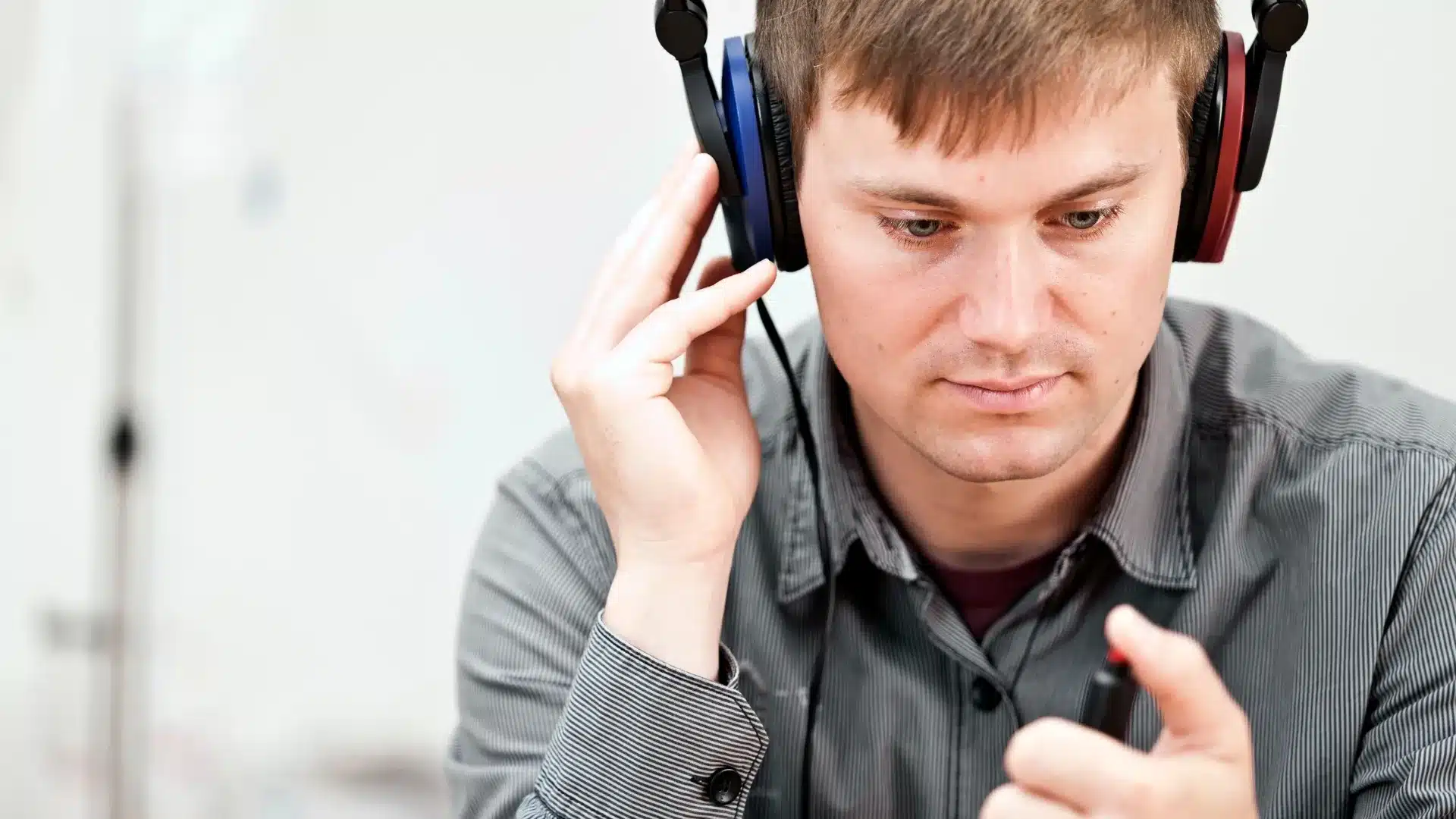
Pure tone tests show how loud sounds must be before the ears register them. Speech understanding and word recognition tests show how clearly the brain processes those sounds into meaningful words. Sitting in a quiet room and pressing a button for faint beeping noises only provides part of the full picture.
Many people score well on tone tests yet still struggle to follow conversations at dinner tables or family gatherings. Speech tests bridge that exact gap by measuring real clarity instead of basic volume. Hearing health professionals use these specific tools to build targeted treatment plans that actually solve daily communication challenges.
Speech Tests Pinpoint Brain Clarity
Hearing starts at the ears, but understanding actually happens inside the brain. Word recognition tests measure how well the auditory nerve sends complex sound patterns upward for processing. A person might hear someone speaking at a comfortable volume level, yet the words still sound scrambled or fuzzy.
These tests separate volume needs from clarity needs by presenting spoken words at easy listening levels. The final score shows how much detail the brain can still process when the sound is loud. This distinction helps set realistic goals for hearing aids, because amplification cannot fix clarity loss that originates within the brain.
Word Tests Show Real-Life Noise Performance
Standard tone tests happen in dead silence, which rarely matches everyday life environments. Speech tests often add background noise to simulate crowded restaurants, busy family living rooms, or noisy workplaces. Testing speech perception against ambient background noise reveals how well the ears filter out unwanted sounds.
People often feel frustrated when they can hear voices but cannot pull individual words out of the background chatter. Testing under these realistic conditions measures that exact masking effect. Results guide hearing health professionals to select hearing technology features designed to isolate speech, lower background noise, and improve ease of understanding during group conversations.
Speech Results Help Fine-Tune Hearing Devices
Modern hearing technology requires precise customization to deliver true listening comfort. Word recognition scores tell hearing health professionals exactly which speech frequencies need an extra boost and which need extra space. Without these detailed measures, hearing aids might simply make muddy sounds louder without making them any clearer.
Detailed test results help program devices to ensure soft consonant sounds become distinct without making background noises uncomfortably sharp. Adjusting settings based on how real words are processed leads to much better outcomes. Proper programming reduces overall listening fatigue, allowing people to stay relaxed and engaged throughout long social events.
Testing Identifies Specific Sound Frequency Losses
Different letters of the alphabet live across different sound frequencies. High frequencies carry light consonant sounds, such as s, f, and th, which give words their distinct meaning. Low frequencies carry deeper vowel sounds that provide raw volume. Speech understanding tests highlight exactly which letter sounds are slipping away during normal conversation.
Missing consonant sounds make words like cat and hat sound completely identical. Identifying these specific frequency gaps allows hearing health professionals to target amplification where it matters most. Filling in missing phonetic details brings back clear word boundaries, eliminating constant guessing during fast conversations.
Word Scores Benchmark Progress Over Time
Hearing capability can shift gradually over several years without obvious daily signs. Speech recognition tests create an accurate baseline to track changes in sound processing over time. Comparing scores year after year shows whether speech clarity remains steady or needs fresh adjustments.
Regular tracking also helps evaluate how effectively current hearing devices are supporting brain health and active communication. If recognition scores begin to drop, hearing health professionals can update programming or suggest targeted auditory training exercises. Consistent testing ensures that hearing care keeps pace with life, preserving clear communication through every stage of aging.
Clear Sound Means Stronger Connections Ahead
Speech understanding and word recognition tests form a vital part of every comprehensive hearing evaluation. They move beyond basic volume, ensuring words sound crisp, distinct, and easy to follow in any setting. Clearer hearing builds stronger connections with family, friends, and colleagues every day.
We are here to help bring clarity back to your daily conversations. A full hearing assessment offers personalized solutions designed specifically for clear, effortless listening. Reach out to our practice today to schedule an evaluation and experience the difference that a clear sound can make.

